With the number of children playing team sports starting to decline slowly each year, all the sports that we played as youths have all taken hits.
These findings have many public health advocates, league organizers and professional sports organizations at their wit’s end.
Some of these low participation numbers can simply be attributed to the current recession, particularly in low-income urban areas.
But the bottom line is, most gifted children are expected to play more competitively while the less talented are usually left behind in recreational leagues riddled with unprofessional or inexperienced coaching, uneven play because of unfair drafting of teams and other things that may have soured their overall experience with team sports.
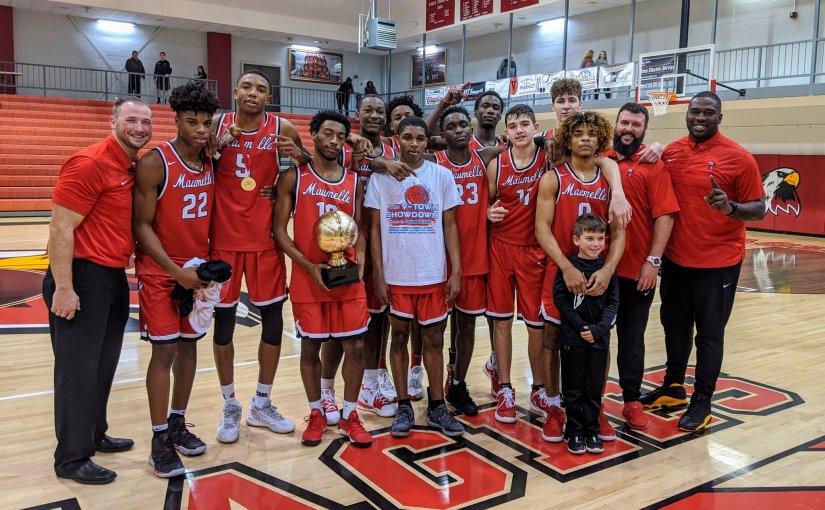
In Faulkner County, the morale of the recreational sports scene is slowly beginning to trend downward for many parents and players who have played in the Vilonia (Central Arkansas) Pee Wee Basketball League – which usually consists of youth teams from Vilonia, Mayflower, Clinton, Rose Bud, Mount Vernon-Enola and Maumelle Charter.
The Pee Wee basketball league has been in existence for nearly a decade despite being accused of unfair practices such as: selecting ultra competitive volunteer coaches who stress winning over development, allowing single-minded program directors who bend the rules to appease their fan base, experienced coaches refusing to allow less skilled players on their team, allowing full club teams to play together against far less skilled novice players and the host city refusing to employ officials outside of their area, which are methods that should not be tolerated in the spirit of youth sports.
With all these advantages in play, Vilonia predictably topped seven of the 12 divisions last season – and five of those teams featured AAU level talent competing against lower skilled teams. They were unchallenged and were winning by scores that more than double the output of their opponents.
What message does this send to players who are just starting to dip their toes into the basketball waters?
Commissioner Corey Eary – who resides in Vilonia and has children in the program – is in charge of enforcing the rules but refuses to make changes to be in sync with other Pee Wee leagues around the country.
What message is this sending to the kids who play in this league?
The lowest point of the league came last February when a bunch of fourth grade girls watched as a coach from Mayflower and his wife along with dozens of parents in the stands violently attacked a game official in a stands clearing brawl during the conclusion of their postseason tournament game.
Strangely enough, there were dozens of parents recording the game and police were summoned to the scene but no video of the incident has surfaced so it has been basically swept under the rug.
Eary also allowed the offending party that ignited the disturbance to coach the next game without penalty.
Another issue that has been in question as that the post-season tournament – which should be held at a neutral site or at least rotated from city to city – is always held in Vilonia with hometown referees working most of the games, giving the already talent rich Vilonia teams an even larger advantage.
There have been past overtures from towns such as Maumelle Charter and Mayflower to host the postseason tournament but have been voted down by Eary and Vilonia.
Eary insists that Vilonia is the only city with the space that is capable of hosting the tournament – which is held over the course of two weekends
– although big, affordable community venues such as the McGee Center and Don Owens Gym to name a few in Faulkner County – are readily available to host events of that magnitude in a neutral setting.
In contrast, the Boys and Girls Club of Faulkner County – who offer a basketball program for the same age groups – operates in a much more sportsmanlike manner and do things the right way.
BGC Director Steven Bray strictly enforces the rules with a conduct waiver prior the start of the season that each coach, parent and player must sign and abide by in order to participate.
The BGC basketball league features six divisions for grades 1st thru 9th, with games held Monday through Fridays.
Prior to the start of each season, Bray conducts a two-day draft with his players in an effort to equally disperse talent and keep the games competitive. Club teams are not allowed to compete together at the BGC.
In addition, the officiating pool is rotated throughout the week to give the teams a different feel each game, which includes the post season tournament.
As a result, game nights at BGC are usually much less stressful and the mood more jovial amongst the players, no matter what the results are on the scoreboard.
The bottom line is, today’s children are playing fewer sports, with the less talented being left behind in recreational leagues with inexperienced or unprofessional coaching, uneven play and the message that they aren’t good enough.
Therefore, at least seventy percent of those same kids quit sports by age 13, soon after they age out of these very same recreational leagues.
And many of those studying the issue believe that the issue lies with the parents.
Many of the adults trying to fix the problem remember a simpler, less competitive time in youth sports. There were pickup games with friends and leagues at neighborhood complexes.
But over the past two decades, youth sports have become an investment to many parents, one that they believe could lead to a college scholarship, even though the odds are bleak.
Youth sports is the new keeping up with the Joneses.
In a recent study conducted by Dr. Amanda Visek, an exercise science professor at George Washington University, 150 children responded and low on their list was winning, which was Number 48.
Other deterrents that were low on the list included playing in select tournaments, wearing cool uniforms and utilizing expensive equipment.
High on their list were positive team dynamics, trying hard, and more importantly positive coaching and learning.
Even though the children have spoken, there is a lot of pushback because adults don’t want to believe what the children want, even though the number one reason that kids quit because playing sports is because they are no longer fun.
Presently, the dynamic of youth sports has become pretty mundane.
The “elite” players – such as the ones in Vilonia (a 5A size school competing against 3A and 2A schools) are shuttled in to win their recreational coach a trophy while the developmental players suffer through 52-2 beat downs in a league that should just be geared towards them learning the game.
The Aspen Institute has made eight recommendations on the subject – they include revitalizing in-town leagues, reintroducing free play, encouraging sports sampling, training coaches and perhaps most important – making sure that children under 13 are able to learn and enjoy their sport without the pressure to win.
These ideas can help create a new culture in youth sports that will encourage adults involved in youth sports to start acting more appropriately.
As the numbers continue to dwindle across the board in youth sports, here’s hoping self-absorbed local directors such as Eary will begin to make the proper changes to ensure an even playing field for all children, no matter how much talent they possess.
 Faulkner County Focus Sports